Animation Throwdown: Card Game
- 4.5
- Rating
- 10.00M
- Installs
- Free
- Price
 Analysis by App-foxy
I went into Animation Throwdown: Epic CCG expecting a light card battler built around familiar animated characters, but I stayed because its matches create a surprisingly readable rhythm. I choose a card, watch the board change, react to the opponent, collect something useful, and then find myself thinking about one more attempt. That cycle is the heart of the game. It is not trying to be a quiet puzzle or a long-form role-playing adventure; it is a character-collecting adventure game with collectible-card battles at its center.
The game comes from Kongregate and is free to start, which makes it easy to test without committing money first. It is aimed at Teen players, and the Android release has been available since September 13, 2016. Its current version is 1.172.0, with Android support beginning at 7.1. I also noticed that it has built a large audience: the store shows an average rating of 4.5 from around 582 thousand ratings, with more than 10 million installs. Those figures do not automatically make a game good, but they do match my impression that this is a well-established mobile card game rather than a short-lived experiment.
From the first card to the first rematch
I begin with the first card because that is where the game’s appeal becomes clear: its basic moves are approachable, but each play can shape what comes next. I’ll look at how the opening battles teach that rhythm and why a rematch can feel like a useful test rather than simply repeating the same fight.
You May Also Like

 Blood Strike: 2.5 Anniversary
Blood Strike’s Loadouts Turn Every Drop Into a Tactical Gamble
A close look at Blood Strike’s custom loadouts: how fast access to signature weapons reshapes its battle royale rhythm, rewards preparation, and narrows the gap between fights.

 Pandora - Music & Podcasts
Pandora’s Music Is Easy to Start, but Harder to Recover
Pandora’s strength is its low-effort path from a seed to a station. Its weak spot is how much confidence it asks you to place in connection, setup, and quiet recovery.

 8 Ball Pool
 Is Built on Rivalries, Rematches, and Routine
A close look at the rivalries, rematches, shared routines, and unanswered safety questions that turn a quick pool match into a persistent mobile community.

 Samsung Music
’s Quiet Strength Is Playing What You Already Own
Its reach comes less from spectacle than from dependable access to a personal library. That simplicity is both the app’s strongest retention engine and its ceiling.

 AccuWeather: Weather Radar
AccuWeather Review: A Quick, Clear Forecast for Everyday Decisions
For everyday plans, the best forecast is the one you can understand quickly. AccuWeather makes rain timing, radar, and local conditions easy to act on, with a few trade-offs.

 Hill Climb Racing
Why Hill Climb Racing Still Turns Crashes Into One More Run
A tiny car, a bumpy hill and one more upgrade: Hill Climb Racing keeps resurfacing because its simple chaos makes every near-miss feel personal.
More From Our News Desk
View All News


The opening move is easy to understand
The first useful thing about Animation Throwdown is that the basic action is immediately clear. Cards go onto the battlefield, characters attack, and the result gives me a reason to decide what to play next. I never felt that I needed to understand a complicated ruleset before enjoying the first few encounters. The game presents its collectible-card structure through recognizable animated personalities and card combinations, so the subject matter does a lot of the early teaching.
That accessibility matters because card games can become intimidating when they begin with too many currencies, keywords, deck screens, and tutorials. Here, the initial appeal is more direct: I see a hand, place a card, and receive immediate feedback from the board. The characters make the action feel less abstract than a battle between anonymous icons. Even when I am still learning, I can tell which decision produced a good result and which one left my position exposed.
The strongest early habit is to stop treating every card as a one-time attack. The interesting decisions come from considering what the next play might become. A card can be valuable because of its current strength, but it can also matter because it helps create a better board position or a more useful combination. That forward-looking choice is where the game begins to separate itself from a simple tap-to-win experience.
Why the board keeps my attention
Each turn has a compact cause-and-effect structure. I make a placement, see the attack or ability resolve, inspect the remaining lanes, and adjust. The feedback is quick enough for a short session, yet the battle still leaves room for regret. A card that looks ideal in isolation may be less useful if it blocks a stronger follow-up, while a modest move can become satisfying when it sets up the next exchange.
I found it helpful to think in terms of board shape rather than only individual card power. If one side of the field is already secure, I may prefer to strengthen a weaker position instead of piling everything into the same lane. This is a small tactical distinction, but it changes the way I read a match. The game becomes less about pressing the brightest option and more about preserving future choices.
That also explains why the experience can appeal to people who do not normally play serious card games. The decisions are understandable at a glance, but they are not completely empty. A new player can enjoy the characters and basic clashes, while a more attentive player can study timing, placement, and the value of building a hand around possible combinations.
The feedback rhythm makes another turn feel worthwhile
Animation Throwdown delivers feedback in several layers. The most immediate layer is the battle itself: cards appear, attacks resolve, and the board tells me whether my plan is working. The next layer is progression. Completing encounters and continuing to play gives the session a sense of movement, so a match does not feel isolated from the larger collection.
That rhythm is especially effective when I play in short bursts. A spare moment becomes enough time to enter a battle, make a few meaningful choices, and leave with some progress. I do not need to reserve an entire evening to understand whether the session went well. The compact structure is one reason I can imagine returning during a commute, while waiting for an appointment, or after finishing a larger game that demands more concentration.
There is a trade-off, though. The same quick feedback can encourage automatic play. Once I recognize a familiar pattern, I may begin selecting cards by habit instead of asking whether the current board calls for a different answer. The game is most enjoyable when I slow down just enough to consider the next exchange. If I rush through every move, the collectible-card layer starts to feel like a sequence of routine taps.
Combining cards is more interesting than simply collecting them
The collection is not just a gallery of characters. The appeal comes from wondering what a new card can do inside the deck I already have. When a combination produces a stronger or more useful result, the reward feels connected to my earlier choices rather than completely random. That connection gives the collection a practical purpose: I am not only gathering more content, I am looking for ways to make my next battle more flexible.
One tip I would give a new player is to resist rebuilding the entire deck every time a new card appears. I get better results by changing one or two pieces, then testing the revised arrangement. That makes it easier to understand which addition actually helped. It also prevents the common card-game problem of owning more options than I can meaningfully evaluate.
A second useful habit is to keep a mental note of cards that repeatedly create awkward turns. A card may look attractive because of its headline effect, but if it regularly arrives at the wrong moment, it can make the deck less reliable. I would rather use a slightly less exciting card that supports my usual sequence than fill the deck with impressive pieces that rarely cooperate.
Rewards give the session a direction
The reward structure is what turns a single battle into a reason to continue. Winning is satisfying on its own, but the larger motivation is the sense that each completed encounter contributes to a better collection and stronger future options. That creates a clear loop: play, receive progress, improve the deck, and test the improvement in another battle.
I like that this loop gives both immediate and longer-term feedback. The immediate reward is the result of the match. The longer reward is the gradual feeling that my collection is becoming more capable. Those two layers work together when the game is balanced well for my current stage. A new card can be exciting because it changes how I approach the next match, not merely because it increases a number on a menu.
The free-to-play structure deserves attention before anyone invests heavily. Optional purchases range from $0.99 to $99.99 per item. I could enjoy the central battles without paying, but the presence of purchasable items can change how I evaluate progress. Players who dislike collection systems with optional spending should approach carefully and decide in advance whether they are comfortable treating purchases as unnecessary extras rather than part of the normal route.
For me, the best way to keep the game enjoyable is to let victories and experimentation lead the pace. I do not measure every session by how quickly I can complete the collection. Instead, I ask whether a new card gave me a different tactical option. That mindset makes the reward system feel like an invitation to experiment rather than a demand to chase everything immediately.
What happens when a session ends
The end of a match creates a natural reset. I see the outcome, take in whatever progress came from it, and return to the collection or battle flow with a fresh decision. That reset is important because it keeps a loss from feeling final. A defeat can point to a weak combination, a poor placement, or a deck that needs a small adjustment. I can then try again with a specific change instead of simply repeating the same actions.
My realistic everyday use case is a short evening break. I might start with the intention of playing one battle, notice that a card combination worked better than expected, and spend the next session testing whether it was repeatable. If the next attempt fails, I have still learned something about the deck. That makes the reset productive: the previous match becomes information for the next one.
Players who prefer a campaign that constantly introduces new scenery may find this repetition less satisfying. The reset here is primarily strategic, not a dramatic change of setting after every battle. The pleasure comes from refining decisions and building a collection around the game’s animated cast. If I want a story-heavy adventure with exploration, dialogue choices, and a large world to wander through, I would look elsewhere. This is an adventure game in a card-battle sense, not a substitute for a traditional console-style adventure.
Where it differs from other mobile card games
Compared with a typical abstract collectible-card game, Animation Throwdown has a warmer and more immediately recognizable identity. The animated characters make the collection easier to remember, and the card combinations feel tied to that playful world instead of existing only as mechanical symbols. That is a real advantage for anyone who finds purely fantasy-themed or heavily competitive card games too impersonal.
Compared with a simple auto-battler, it gives me more ownership over the important moments. I am not only watching units fight; I am deciding what enters the field and how the board develops. At the same time, it is less demanding than a highly technical strategy card game that expects constant tournament-level optimization. That middle ground is probably its best position: approachable enough for casual play, but deep enough to reward attention.
The compromise is that players seeking complete control may find the collection and progression structure limiting, while players seeking total simplicity may find deck choices and card combinations more involved than expected. It sits between those audiences. I would recommend it to someone who wants recognizable characters, short battles, and a reason to keep tuning a collection. I would skip it if my main priority were a purely skill-based competitive environment with no interest in character collecting or optional purchases.
Small decisions that improve the experience
I found three practical approaches particularly useful. First, I test deck changes in small steps. Replacing several cards at once makes it difficult to learn from the result, while a single adjustment tells me much more about the deck’s behavior.
Second, I pay attention to the opening hand without assuming it determines the entire match. A strong start helps, but preserving a useful follow-up can matter more than spending every powerful card immediately. The safest move is not always the one with the biggest first impact.
Third, I use losses as a prompt to identify one problem rather than a reason to discard everything. Was the issue a weak opening, an awkward combination, or a board position I neglected? That question keeps the reset meaningful and prevents the collection screen from becoming an endless cycle of random changes.
These habits also help answer a common concern: does the game require constant attention? Not always. I can play casually and enjoy the characters and progression, but the more I care about consistent results, the more I need to watch the board and think ahead. The game supports both styles, although casual players should not expect every deck to perform equally well without experimentation.
Who should download it
I think Animation Throwdown is a good fit for players who enjoy collecting familiar animated characters, making compact tactical choices, and returning to a deck after each match with a small improvement in mind. The free entry point makes it reasonable to try, and the large existing player base suggests that the format has lasting appeal. Its Teen content rating also makes clear that it is not designed as a preschool game, even though its visual identity is playful.
It is particularly suitable for short, repeatable sessions. I can play when I have only a little time, but the game still gives me enough strategic texture to make a rematch feel different. The best audience is someone who enjoys a loop of action, feedback, reward, and adjustment rather than someone who needs every session to deliver a new chapter or location.
I would be more cautious about recommending it to anyone who dislikes free-to-play collection systems. Even when I avoid spending, the existence of optional purchases remains part of the surrounding design. The listed purchase range reaches from $0.99 up to $99.99 per item, so players who are sensitive to impulse buying should set their own limits before playing. That is not a reason to reject the game outright, but it is an important part of deciding whether its progression style suits you.
The loop verdict
My final impression is that Animation Throwdown succeeds because its loop is easy to enter and difficult to exhaust immediately. The first action is simple: play a card and watch the board respond. The feedback is fast enough to keep the match moving. The reward gives me a reason to inspect my collection. The reset turns a win or loss into a new test. Then the possibility of a better combination starts the cycle again.
Its limitations are equally clear. The experience can become repetitive if I stop experimenting, and it is not the right replacement for a story-led adventure or a strictly competitive card simulator. Optional purchases also mean I need to manage my expectations and spending. Still, those caveats do not erase what it does well.
My recommendation is to try it as a character-focused card battler, not as a conventional adventure game. If the idea of improving a deck through small discoveries sounds satisfying, the game offers a friendly way into that habit. I enjoy it most when I treat each session as a quick experiment: make one decision, read the result, collect the reward, and decide whether the next attempt deserves another few minutes.
FAQs for Animation Throwdown: Card Game
01What is Animation Throwdown: Epic CCG?
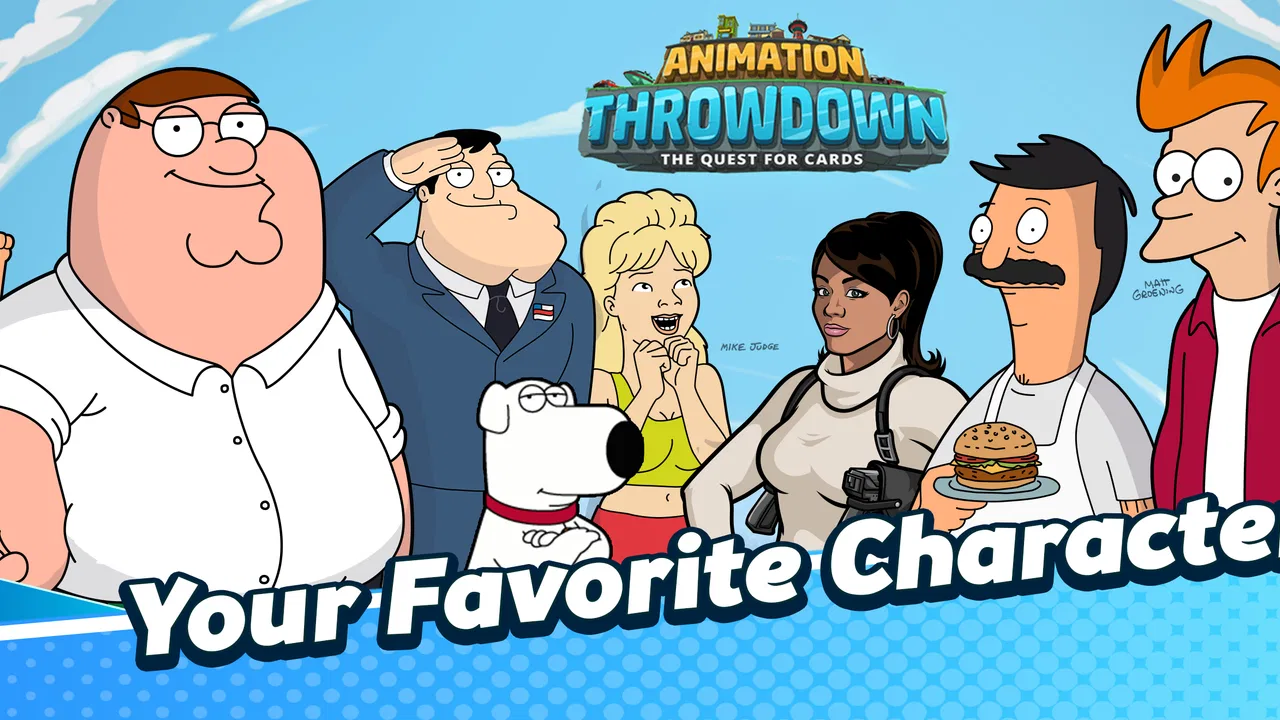
Animation Throwdown: Epic CCG is a collectible card game that combines characters and scenes from popular animated TV shows like Family Guy, Futurama, American Dad, King of the Hill, and Bob's Burgers. Players build decks, strategize, and compete in battles using cards featuring their favorite characters and moments from these series.
02Is Animation Throwdown free to play?
Yes, Animation Throwdown: Epic CCG is free to download and play on both Android and iOS platforms. However, it does offer in-app purchases that can enhance gameplay, such as buying card packs or energy refills. While the game is enjoyable without spending money, some items may provide advantages during battles.
03What are the main features of Animation Throwdown?
Animation Throwdown offers a variety of features including a single-player story mode, PvP battles, guilds for team play, and special events. Players can collect hundreds of cards, upgrade them for better performance, and use strategic combinations to win battles. The game also includes humor and references from the featured TV shows.
04How does the multiplayer mode work in Animation Throwdown?
The multiplayer mode in Animation Throwdown allows players to compete against others in PvP battles. Players can join guilds, which are teams that can participate in guild events and wars. Multiplayer matches require strategic deck building and tactical play to climb the ranks and earn rewards.
05What are the system requirements for installing Animation Throwdown?
To install Animation Throwdown on Android, you need a device running Android 5.0 or later. For iOS, the game requires iOS 9.0 or later. A stable internet connection is essential for both downloading updates and engaging in multiplayer battles. Ensure your device meets these specifications for optimal performance.
Pros
- Addictive card battle mechanics.
- Features beloved characters from multiple shows.
- Frequent updates with new content.
- Engaging multiplayer mode.
- Free-to-play with optional in-app purchases.
Cons
- Requires a stable internet connection.
- Can be time-consuming to progress.
- Some content locked behind paywalls.
- Graphics could be more polished.
- In-app purchases can be expensive.

Animation Throwdown: Card Game
Gallery